The Solemnity of All Saints – 1st November 2026
Holiness: Allowing Ourselves to Be Loved by God and Learning to Love
The readings for this Sunday lead us along a path of hope and invite us to reflect on an important question: What does it mean to be holy? We often think of saints as extraordinary people, far removed from our everyday lives men and women capable of heroic deeds, free from weaknesses and difficulties. The Word of God, however, invites us to look at holiness from a different perspective. To be holy does not mean to be perfect, but to allow ourselves to be touched by God’s love and to let that love transform our lives.
“These are the ones who have come out of the great tribulation”
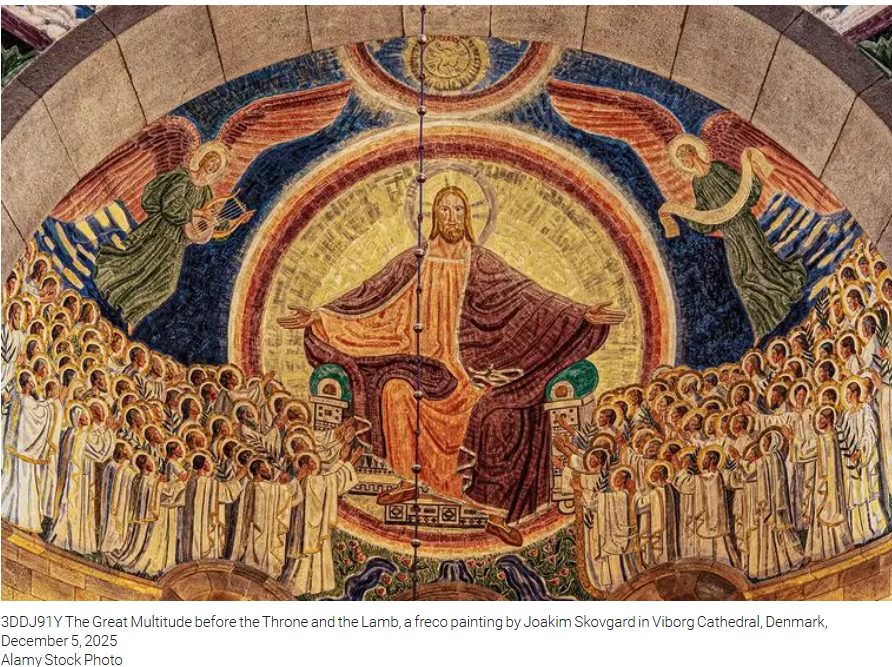
In the vision of the Book of Revelation, John beholds an immense multitude of people from every nation and people. They are clothed in white and stand before the throne of God. But who are these people? They are those who have come through the great tribulation and have washed their robes, making them white in the blood of the Lamb. This image reminds us that holiness is not a path free from suffering. The saints, too, experienced hardship, fear, disappointment, and the trials of life. The difference lies not in having been spared pain, but in having passed through suffering without ceasing to trust in God. We, too, know our own tribulations: an illness, the loss of a loved one, a family going through difficulties, the burden of loneliness, or a prayer that seems to go unanswered. In such moments, we may feel abandoned, as though God were far away.
And yet, it is precisely there that the Lord is close to us. He does not always take away our suffering, but He offers us His sustaining presence and a hope that does not disappoint. The white robes speak to us of the new life we have received through Christ. They are not a reward for those who have never made a mistake, but a sign of the salvation granted to those who place their trust in Him. Holiness begins when, even in times of trial, we choose not to close our hearts, not to give in to hatred, and to continue believing that love is stronger than evil.
“See what great love the Father has bestowed on us”
The second reading brings us to the very heart of our faith: before asking ourselves what we must do for God, we are invited to recognise what God has already done for us.
“See what great love the Father has bestowed on us, that we may be called the children of God. Yet so we are!”
Here lies our deepest identity: we are beloved children of God.
How often, however, do we live as though we constantly had to prove our worth? We seek approval, fear the judgement of others, compare ourselves with those who seem more successful, and become discouraged by our own limitations. Sometimes, we even come to believe that God loves us only when we behave well.
But the Father’s love comes before any merit of ours. We are not loved because we are perfect; we are loved because we are His children.
This does not mean that we can live however we please, without concern for the choices we make. Rather, it means that we can change without being crushed by fear, because we know that we are accompanied by a Father who loves us. John adds that we have not yet fully become what we shall be. Our lives are a journey, a process of continual growth. Every day, we can become a little more capable of forgiving, listening, understanding, and beginning again.
Holiness, then, does not consist in having no faults, but in never ceasing to allow ourselves to be transformed by God’s love. Those who know they are loved can stop living to impress others and begin living in order to love.
“Blessed are the poor in spirit”
In the Gospel, Jesus goes up the mountain, sits down, and begins to teach His disciples. His words, the Beatitudes, turn the world’s way of thinking upside down.
We often call the rich, the powerful, those who always manage to get their own way, and those who seem to need no one and nothing, blessed. Jesus, however, proclaims blessed the poor in spirit, those who mourn, the meek, those who hunger and thirst for righteousness, the merciful, the pure of heart, the peacemakers, and those who are persecuted for the sake of righteousness.
He is not saying that poverty, grief, or persecution are good in themselves. He is not asking us to seek suffering. Rather, He reveals that no human situation lies beyond the reach of God’s loving presence, and that true happiness is not found in success, possessions, or power.
To be poor in spirit means recognising our need for God and for others. To be meek means refusing to use force to dominate others. To be merciful means refusing to reduce a person to their mistakes. To hunger and thirst for righteousness means refusing to grow accustomed to indifference in the face of evil. To be a peacemaker means beginning to build peace in our closest relationships, even when it would be easier to fuel conflict. The Beatitudes are not merely beautiful words to be heard in church. They are a concrete path to follow every day. When we forgive instead of seeking revenge, when we listen to those whom nobody else hears, when we defend the vulnerable, and when we choose truth without humiliating anyone, the Gospel becomes a living reality. Perhaps it is precisely here that we can recognise the saints of our own time: not only those honoured on the altars, but also those found in our homes, hospitals, communities, and workplaces in all those people who, quietly and without seeking recognition, continue to sow goodness.
One Calling, Three Great Messages
The three readings shed light on one another.
- The Book of Revelation shows us our destination: a multitude of people redeemed and gathered before God. Suffering does not have the final word.
- The First Letter of John reveals the foundation of our identity: we are beloved children of the Father. We do not journey towards God in order to earn His love; we do so because His love has already reached us.
- The Gospel of Matthew shows us the way: the Beatitudes. Through meekness, mercy, righteousness, and peace, the love we have received becomes love we give to others.
Holiness, therefore, is not a reality reserved for a select few. It is the vocation of every baptised person, lived out according to their own circumstances and abilities.
Not all of us are called to accomplish great works, but all of us can perform small acts with great love. Not all of us can change the entire world, but each of us can make the little world entrusted to our care more humane.
A kind word, a visit to someone who is lonely, sincere forgiveness, or an outstretched hand to someone in difficulty: these are simple gestures, yet they can become places where God makes His presence felt. Holiness Is Love Lived Every Day
These readings invite us not to be afraid of holiness and not to regard it as an unattainable ideal. The Lord does not ask us to be people without weaknesses, but people who are willing to let themselves be loved and to begin again. He asks us not to allow difficulties to harden our hearts, not to let selfishness overcome generosity, and not to lose hope when goodness seems weaker than evil. There is a simple question we can carry with us as we return to our homes:
Can the people who encounter me catch a glimpse of God’s love?
Not through perfect words or eloquent speeches, but through the way I listen, welcome others, forgive, respect, and care for them.
Perhaps we will not always succeed in living the Beatitudes as we would wish. There will be failures, moments of weariness, and days when it seems that we are making little progress. But every day, we can begin again, confident that we are beloved children of God and that He never grows weary of accompanying us. Holiness does not begin when we have nothing more to learn. It begins when we allow God to enter our lives and permit Him to teach us how to love.
And then, one day, we too may become part of that immense multitude standing before the throne of God not because we have been flawless, but because, through His grace, we have learned to live in love.
Concluding Prayer
Lord Jesus, You have shown us, through the Beatitudes, the path to true happiness. Teach us to be poor in pride and rich in trust, gentle in our words, merciful in our judgements, hungry and thirsty for righteousness, and builders of peace. When we pass through the trials of life, help us not to lose hope. When we feel weak and fragile, remind us that we are beloved children of the Father. When we encounter the suffering of others, free us from indifference and make us capable of compassion.
May our holiness be not merely a desire, but a daily choice: to love a little more, to forgive more wholeheartedly, to serve with humility, and to sow peace wherever we live. Accompany us on our journey, so that one day we may share in the joy of the saints and contemplate Your face for ever, Amen.
HAVE A BLESSED SUNDAY, EVERYONE!