Thirtieth Sunday in Ordinary Time – Year A (2026)
“Loving God, Recognising Our Brother and Sister”
There is a question that runs throughout the history of faith and continues to challenge our conscience profoundly today: What does it truly mean to love God?
Is it possible to pray, attend church, and know the Scriptures while remaining indifferent to the suffering of those who live alongside us? Is it possible to speak of the love of God without allowing ourselves to be touched by the loneliness, poverty, and wounds of others?
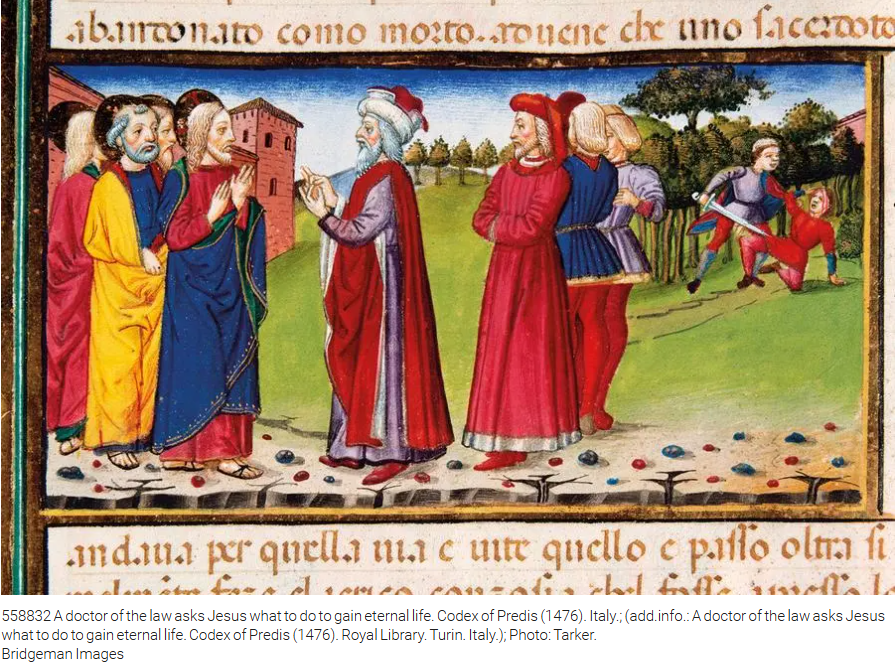
The Word of God proclaimed this Sunday leads us to the very heart of our faith, reminding us that love for God and love for our neighbour are not two parallel paths, but two inseparable dimensions of a single spiritual experience. In the Gospel of Matthew, a scholar of the Law questions Jesus in order to test him: “Teacher, which commandment in the law is the greatest?”
The question appears to concern a theoretical matter, but Jesus responds with words that go far beyond any religious dispute: “You shall love the Lord your God with all your heart, with all your soul, and with all your mind.” He then adds: “You shall love your neighbour as yourself.” Through these two commandments to love God and to love our neighbour Jesus brings together the whole Law and the Prophets. He does not abolish the commandments; rather, he reveals their deepest meaning. Faith is not primarily a set of rules to be observed, but a relationship of love that transforms the heart and gives direction to our lives.
Exodus: God Makes Himself Known in the Vulnerability of the Poor
The first reading presents us with a God who takes the side of the most vulnerable. Through Moses, the Lord commands his people not to mistreat the foreigner, oppress the widow and the orphan, or take advantage of the poor in their need. What is particularly striking is the reason God gives: “For you were once foreigners in the land of Egypt.” It is as though the Lord were saying to his people: Do not forget where you came from. Do not forget the time when you were the ones in need of someone to set you free. In this way, the memory of suffering becomes the foundation of compassion. Those who remember having been saved cannot look with contempt upon those who remain trapped in their own difficulties. Those who have experienced mercy are called to become merciful themselves.
God does not simply demand proper behaviour; he teaches his people to see the world through his eyes. And his gaze rests first and foremost upon those who have no voice, those who lack the means to defend themselves, and those who risk being forgotten.
Even today, the foreigner, the widow, and the orphan have recognisable faces. They are the people forced to leave their homeland, the elderly who have been left alone, families overwhelmed by financial hardship, young people who have lost hope, and those who live beside us yet seem invisible to everyone.
The Word of God reminds us that a person’s dignity does not depend on their usefulness, social position, or ability to repay the good they have received. The measure of our faith is also revealed in the way we treat those who have nothing to offer us in return. It is not enough to be moved by the great sufferings of the world. We must also learn to recognise the suffering close to home: the everyday struggles that may be less visible, but are no less painful. Love begins when we stop regarding another person’s need as an inconvenience and begin to recognise it as a call addressed to our own humanity.
The First Letter to the Thessalonians: A Faith That Becomes a Witness
In the second reading, Saint Paul addresses the Christian community in Thessalonica and acknowledges the fruits of an authentic faith within it. The Thessalonians have welcomed the Word not as a mere discourse, but as a force capable of transforming their lives. Paul recalls that they turned away from idols to serve the living and true God and to await the return of his Son.
This conversion does not consist merely in abandoning certain religious beliefs in favour of others. It means changing the centre of our lives and ceasing to entrust our hearts to things that promise happiness without ever being able to give it fully. We, too, have our idols. They do not always take the form of statues or images. Sometimes they are money, success, the need to impress others, the desire always to be right, the pursuit of approval, or the belief that we are entirely self-sufficient.
These idols become dangerous when they take the place of God and prevent us from loving freely. When everything revolves around our own interests, our neighbour becomes someone useful when we need something and an obstacle when they ask something of us. The community of Thessalonica, by contrast, becomes an example to other believers. Its faith spreads through the witness of transformed lives. This is an important lesson: the Gospel becomes credible when it can be seen in the choices made by those who proclaim it.
It is not our words alone that bear witness to Christ, but also the way we face difficulties, our willingness to forgive, our faithfulness in times of trial, and our readiness to serve without seeking recognition. A Christian community is truly missionary when those who encounter it can glimpse something of God’s goodness through its actions. We do not need to be perfect to bear witness to the Gospel. Rather, we must allow the Gospel to continue converting us, acknowledging our limitations and beginning anew each day.
The Gospel: Loving God with Our Whole Being and Our Neighbour as Ourselves
In the Gospel passage, Jesus brings together two commandments that cannot be separated.
To love God with all our heart, with all our soul, and with all our mind means directing our entire existence towards him. This includes not only our moments of prayer, but also our work, relationships, responsibilities, decisions, and the way we use our time. God does not ask for only a part of our lives; he desires to dwell within them completely. Yet, for this love to be authentic, it must find expression in our love for our neighbour. We cannot claim to love God, whom we do not see, while ignoring the brother or sister we encounter every day.
Our neighbour, however, is not simply someone we like, someone who shares our opinions, or someone who recognises our merits. Our neighbour is also the person who challenges us, the person who has disappointed us, the person who is different from us, and the person we cannot immediately understand. Love does not mean approving of everything, abandoning the truth, or passively accepting injustice. It means recognising in the other person a dignity that we have no right to erase, even when we must correct them, establish boundaries, or distance ourselves from wrongful behaviour.
Then there is the expression that deserves our careful reflection: “You shall love your neighbour as yourself.” Jesus does not ask us to despise ourselves in order to devote ourselves to others. He invites us to learn a form of love that also embraces our own humanity, recognising that we, too, are fragile and in need of forgiveness, attentive listening, and mercy.
Those who cannot accept their own limitations risk becoming harsh towards the limitations of others. Those who do not recognise their own need for mercy find it difficult to offer mercy to others. Those who are constantly at war with themselves may turn their own wounds into harshness towards their neighbours. To love as Jesus loves means learning to look upon ourselves and others with a gaze that does not humiliate but lifts us up; a gaze that does not excuse every mistake, yet always leaves open the possibility of beginning again.
This is why the two commandments are inseparable: the love of God teaches us to love our neighbour, and love for our neighbour gives concrete expression to our love for God.
A Question for Our Lives: Who Is My Neighbour Today?
All three readings converge upon the same truth: faith cannot remain confined within our devotional practices; it must become a way of life. Exodus calls us not to oppress the vulnerable. Saint Paul presents a community whose faith becomes a living witness. Jesus points us towards the heart of everything: love God and love your neighbour.
The question, therefore, is not simply: Do I love God? It becomes much more concrete: Does the way I live allow others to experience something of God’s love? When people encounter me, do they find someone willing to listen, or someone who is always in a hurry? Do they find understanding or judgement? Do they find an outstretched hand or a closed door?
In our families, how often is love taken for granted and, precisely for that reason, neglected! We grow accustomed to one another’s presence, postpone kind words, and allow silence and resentment to accumulate. Yet the first expression of charity often begins at home: listening without interrupting, apologising, being patient, and noticing the weariness of those who share our lives. The same can happen within our Christian communities.
We may take great care in celebrating the liturgy while, at the same time, forgetting the wounded person, the poor, those who have drifted away, or those who feel excluded.
Yet a community is not faithful to the Gospel simply because it celebrates the liturgy well. It is faithful when its celebrations become a source of fraternity, service, and welcome.
The Eucharist gathers us around Christ, who gives himself out of love. We cannot receive this gift without allowing ourselves to be challenged to become, in turn, people who are willing to give themselves for others. Of course, we cannot solve every problem or respond to every need. But we can prevent our sense of helplessness from becoming indifference. We can do what lies within our reach, with sincerity and perseverance, without waiting for extraordinary opportunities.
A thoughtful gesture, a visit, a word of encouragement, practical assistance, or forgiveness offered at great personal cost: these may be small seeds, but the Kingdom of God grows through them as well.
Conclusion: Love Is the Living Expression of Faith
The Word of God proclaimed this Sunday invites us to return to what is essential. At times, we risk complicating our spiritual lives by multiplying our worries, judgements, and disputes, while Jesus brings us back to the heart of the Law: love.
To love God with our whole being and to love our neighbour as ourselves is not an ideal reserved for a select few; it is the vocation of every Christian. It is a daily journey, marked by concrete choices, failures and new beginnings, and the ongoing conversion of the heart. We are not asked to love always with intense feelings, but to choose what is good even when it comes at a cost. We are not asked to eliminate every conflict, but to ensure that resentment does not have the final word. We are not asked to be flawless, but to allow God’s grace to transform our way of thinking and acting, little by little.
Perhaps, in the end, the most important question will not be how many prayers we have recited, how many things we have accomplished, or how many times we have spoken about God. Rather, it will be whether, through our lives, someone has felt less lonely, less abandoned, and more deeply loved.
For God, who is invisible to our eyes, has chosen to draw near to us through the face of our brother or sister. To love God means allowing ourselves to be loved by him until we learn to love as he loves. And to love our neighbour means allowing that love to become visible in the real and concrete circumstances of people’s lives. May the Lord, then, grant us hearts that remember the mercy we have received, eyes attentive to those who suffer, and hands ready to serve. May our faith be not merely a word spoken by our lips, but a light that shines in the lives of others.
Final Prayer:
Lord Jesus, You remind us that the whole Law is fulfilled in love. Free us from a faith made up only of words, habits, and outward gestures. Teach us to love you with all our hearts, to seek you in prayer, and to recognise you in the face of every brother and sister. Give us a grateful memory of the mercy we have received, so that we may never become indifferent to the suffering of others. Open our eyes to those who are lonely, our hearts to those who are wounded, and our hands to those who need help. Help us to love even when it is difficult, to forgive without humiliating, to serve without seeking rewards, and to build relationships in which everyone feels welcomed and respected. May our families and our communities become places where your love is made real and your presence can be recognised. May we, by loving you and our neighbour, bear witness to the world to the beauty of your Gospel. Amen.
Have a blessed Sunday, everyone!