Eleventh Sunday in Ordinary Time (Year A) – 2026
The readings for this Sunday present a remarkably coherent thread: God takes the initiative, transforms a fragile people into a covenant community, and then sends them into the world with a distinctive way of life one marked by mercy.
In the passage from Exodus, Israel arrives at Sinai after the experience of liberation from Egypt. It is not yet a “mature” people, but rather a group of individuals who have only recently been set free, still carrying within them the mentality of slavery. Yet God does not begin with what is lacking; He begins with what He has already accomplished: “I carried you on eagles’ wings.” Identity precedes performance. Only afterward comes the call: to be a “kingdom of priests and a holy nation,” that is, a people who live in relationship with God and make that relationship visible in history.
The Letter to the Romans goes even deeper. Paul does not describe a strong humanity seeking God, but a fragile humanity: “while we were still weak.” God’s love is not a response to human merit; it is a decision that precedes all merit. The cross of Christ is the point at which this logic becomes fully evident: we are not saved because we are righteous; rather, we become righteous because we are loved. The result is not merely forgiveness but reconciliation—the passage from being “enemies” to living in peace with God.
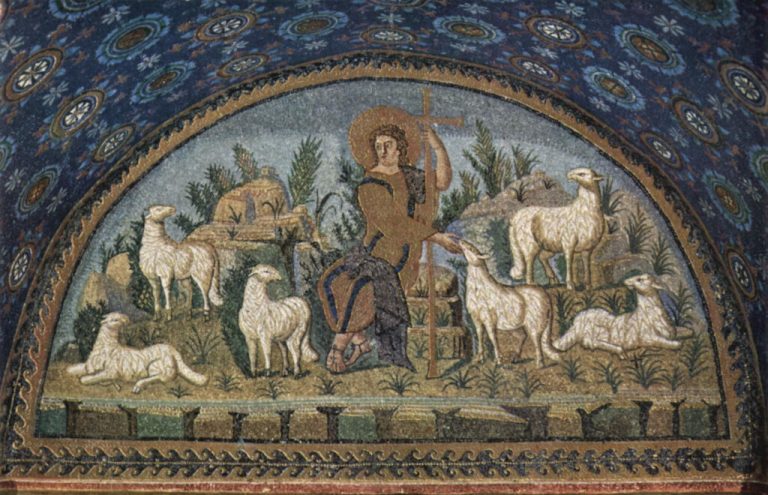
In the Gospel according to Matthew, Jesus sees the crowds and is moved with compassion, for they are “harassed and helpless, like sheep without a shepherd.” Here we encounter a decisive perspective: God does not observe from a distance; He allows Himself to be touched by the concrete condition of human beings. Yet He does not act alone. Immediately afterward, He involves His disciples. “Freely you have received; freely give” (Matthew 10:8). Mercy received becomes mission.
When these three texts are considered together, a single movement emerges:
- God liberates (Exodus): identity is born from an act of liberation.
- God saves (Romans): love reaches us while we are still incapable of deserving it.
- God sends (Matthew): what has been freely received cannot remain enclosed within us; it must be shared.
There is also an interesting tension. Both Israel at Sinai and the disciples of Jesus are entrusted with a great responsibility (“a kingdom of priests,” “go and heal”), yet this responsibility does not arise from the pressure of duty. Rather, it springs from the memory of having been saved.
A possible spiritual synthesis could be this: we do not become the “people of God” through moral effort alone, but through the experience of a love that precedes us; and it is precisely that love which makes possible a way of life that heals rather than dominates.
Blessed Sunday to everyone!