From Darkness to Light: The Journey of Faith on ‘Laetare’ Sunday
The Fourth Sunday of Lent, called “Laetare”, marks the centre of the Lenten journey toward Easter and is characterised by a call to joy. On these central Sundays, the liturgy connects faith to three signs: water, light, and life. In particular, this Sunday presents the Gospel story of the healing of the man born blind, through which Jesus reveals himself as the Light of the world. The story focuses not only on the miracle, but above all on people’s reactions, which reflect the journey of faith of each disciple. The miracle becomes a symbol of the baptismal journey and conversion: from blindness to light, that is, from disbelief to faith.
The text also emphasises the importance of discernment and critical thinking, necessary to distinguish truth from appearances and true good from false good in a world filled with information and illusions. The blindness of the Gospel represents sin and the inability to recognize God; only by welcoming the light of Christ can man emerge from the darkness. Finally, light becomes a symbol of life itself: just as in common parlance birth means “coming to light” and death means “being extinguished,” so light represents truth, justice, and life, while darkness indicates falsehood, injustice, and death. The text explores the symbolism of light and darkness, showing how even the natural cycle of day and night expresses their meaning for human life: in darkness, the world loses shape and man experiences confusion and fear, while light restores life, joy, and hope.
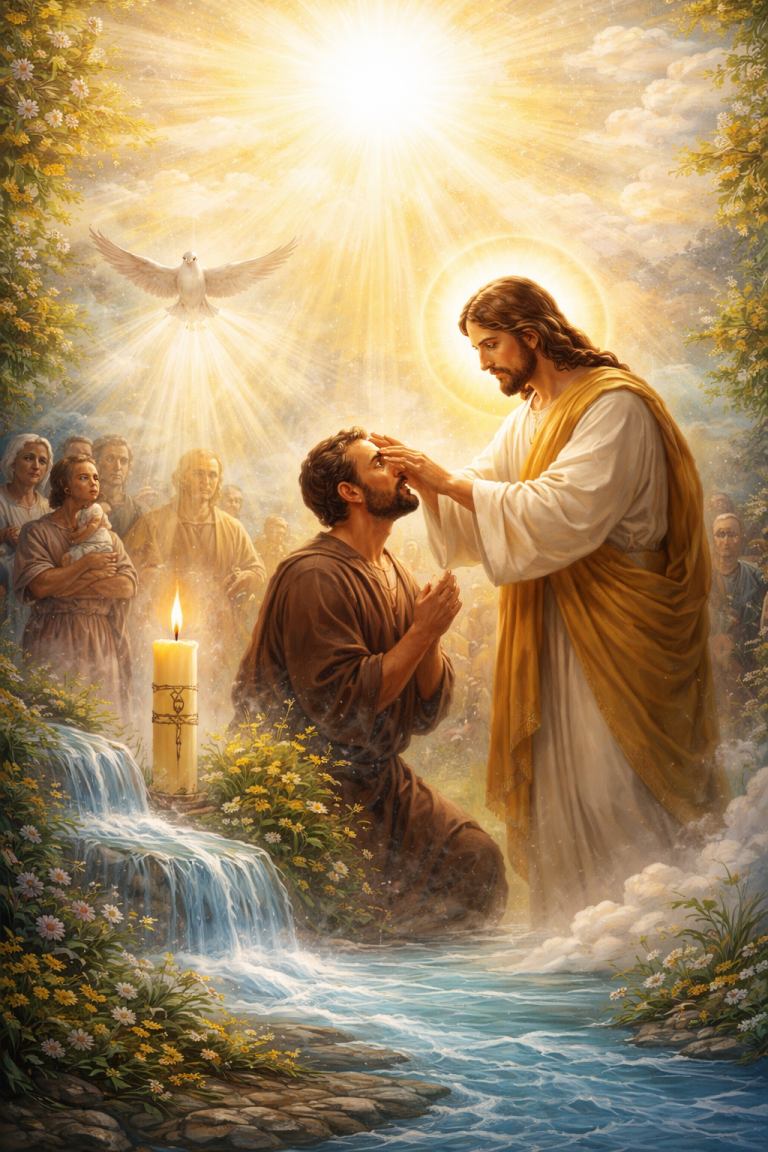
In the Gospel, these two realities collide in the figure of the man born blind, who represents humanity marked by sin and the inability to see the truth. The encounter with Christ, the Light of the world, restores to humanity sight, dignity, and the ability to understand reality and the meaning of life. Christian tradition interprets this episode in a baptismal key: Baptism is the passage from darkness to light, as in the Pool of Siloam. For this reason, the first Christians called thebaptisedd “enlightened.” Welcoming Christ means learning to see reality, history, and humanity with the eyes of faith and according to the logic of the Gospel.
However, this journey is never complete: in life, shadows and difficulties remain, and faith often conflicts with the mentality of the world. The episode of the man born blind demonstrates this: the parents are afraid of the religious authorities, while the healed son becomes courageous and unmasks the blindness of those who think they can see. The baptized, freely chosen by God and enlightened by the Spirit, are called to live as children of light, manifesting in their lives the transformation received in Baptism. The Eucharist also renews this enlightenment because it unites believers to Christ, the true Light. The text explains the symbolic meaning of light and darkness in the Gospel of the man born blind. Blindness represents sin and distance from God, while the encounter with Christ, the Light of the world, restores sight, dignity, and new life to humanity. The story is interpreted as a symbol of Baptism, which enlightens believers and calls them to live as children of light, even amid difficulties and conflicts with the world.
Being “light in the Lord” means not only receiving the light of faith, but also becoming a source of light through one’s actions. Saint Paul indicates that this light is manifested in the fruits of goodness, justice, and truth. In a world marked by violence, conflict, and lies, the lives of Christians should reflect the opposite: love, acceptance, forgiveness, honesty, and fidelity to the Gospel. Darkness does not produce true life, but only fruitless works. Therefore, the family and the Christian community should be places where the light of faith is manifested and transmitted.
The evangelist John, through the story of the man born blind, shows the progressive path of faith. The blind man moves from an initial knowledge of Jesus as a good man, then as a prophet, until he recognizes him as Lord and Savior. In contrast, the Pharisees remain locked in their religious patterns and are unable to recognize God. This path invites every believer to live with consistency and authenticity, remembering that God looks at the heart, not at appearances. Faith is a new perspective on reality and on oneself: no one can reach the light alone, but must receive it from Christ and undertake an often difficult journey. The encounter with Jesus opens the eyes of faith and leads to the personal profession: “I believe in God!”
The text affirms that even today, as in Jesus’ time, those who arrive at faith must journey through a journey of stages and choices. The light of Christ is not always easy to accept, because it challenges human life and comes into conflict with “darkness,” that is, with sin and the mentality of the world. For this reason, the disciple cannot remain neutral: he must take a stand, sometimes becoming fragile and vulnerable. However, he finds salvation in trust in Christ, recognized as Lord and Savior, who offers a new perspective on reality and enables us to live as children of God. The text also proposes some liturgical signs to celebrate this Sunday: the reminder of Baptism through the blessing and sprinkling of water, or the enhancement of the baptistery with light. Since Baptism was anciently called “illumination”, the sign of light can also be expressed by giving a small candle to catechumens or the faithful, to be lit during family prayer.
At this critical moment in the world, let us remember to pray for the Holy Father and the Universal Church, especially for all the leaders of nations, may this Light, “Jesus Christ”, illuminate the minds and hearts of each one. May they have the eyes of faith to see beyond, not to firm in the human appearances. May we appreciate and welcome each brother and sister, our neighbors in our towns, homes, and communities, so that we may truly live consistently as brothers and sisters in Christ.