Twenty-Ninth Sunday in Ordinary Time – Year A (2026)
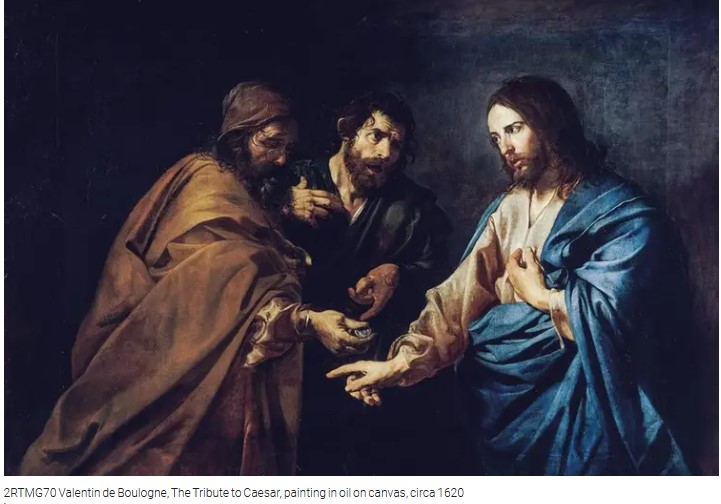
“Give to Caesar what belongs to Caesar and to God what belongs to God.”
The readings for this Sunday invite us to reflect on a fundamental question in our lives: To whom do we truly belong, and what place does God occupy in our daily decisions?
In the Gospel, Jesus is put to the test by the Pharisees and the Herodians, who seek to trap Him with an apparently simple question: Is it lawful to pay the tax to Caesar or not? Any answer He might give could be used against Him. Yet Jesus refuses to be trapped. He asks them to show Him a coin and then asks, “Whose image and inscription are these?” They answer, “Caesar’s.” He then utters words that have echoed throughout the centuries: “Give therefore to Caesar what belongs to Caesar, and to God what belongs to God.” Jesus is not simply trying to settle a question of taxation. Rather, He wishes to lead His listeners towards a deeper reflection: Can we acknowledge our duties towards society without forgetting that our lives belong to God?
The coin bears the image of Caesar, but every human being bears within himself or herself the image of God. This is the heart of the Gospel message. We can give Caesar what is his: pay our taxes, obey the laws, and fulfil our civic and social responsibilities. These are important duties because faith does not distance us from the realities of everyday life; rather, it calls us to live responsibly and honestly within them.
However, there are things we must never surrender to any human power: our conscience, our dignity, our inner freedom, and our relationship with God. The danger is that we may give Caesar not only what rightfully belongs to him, but also the place that belongs to God. This happens when money becomes the standard by which we measure every decision, when success matters more than people, when power causes us to forget justice, or when the opinions of others become more important to us than the truth. We, too, may carry the image of Caesar in our wallets, but we must ask ourselves: What image are we keeping in our hearts?
If we are created in the image of God, then our lives should reflect something of His love, His mercy, and His justice. It is not enough simply to call ourselves Christians; we are called to make God visible through the way we treat others, especially the most vulnerable among us.
God Works Beyond Our Expectations:
The first reading, taken from the Book of the Prophet Isaiah, presents us with a surprising figure: Cyrus, King of Persia, whom God chooses to accomplish His plan of liberation for Israel.
Cyrus does not belong to the people of Israel, nor does he know God in the same way as His chosen people. Nevertheless, God uses him to open a path towards salvation. This passage reminds us that God’s action goes beyond our assumptions and expectations. We often think that God can work only through people who share our faith, our language, or our way of seeing things. Yet the Lord is free and can use even unexpected instruments to accomplish what is good.
How often do we risk judging someone before we have even come to know them? How often do we assume that someone cannot bring anything good simply because they are different from us?
The Word of God invites us to broaden our vision. We are not the ones who determine the boundaries of God’s action. Rather, we are called to recognise the signs of His presence even in places where we would never have expected to find them. God can reach us through a simple word, an act of solidarity, a person who challenges our way of thinking, or even a difficult situation that forces us to change direction. Authentic faith does not make us the masters of God; instead, it teaches us to recognise His work even when it does not correspond to our expectations.
A Faith That Bears Fruit in Love and Hope;
In the second reading, Saint Paul addresses the Christian community in Thessalonica with words of gratitude. He recalls their “work of faith,” their “labour of love,” and their “steadfastness of hope.”
These three expressions describe a living faith capable of transforming our lives.
Faith is not merely a matter of knowing things about God, memorising prayers, or participating in religious celebrations. It means trusting Him even when we do not understand everything. It means allowing His Word to guide us in our daily decisions. Charity is not simply a feeling of goodwill. It is a concrete effort that requires patience, attentive listening, forgiveness, and a willingness to give up something of our own in order to make room for others. Hope, finally, is the strength that enables us not to surrender in the face of difficulties. It does not mean pretending that everything is going well, but believing that evil, suffering, and disappointment will not have the final word.
The community of Thessalonica is praised because the Gospel did not remain merely a message they had heard; it became a way of life.
We, too, can ask ourselves: Does our faith bear fruit? Do the people we encounter find in us greater patience, deeper understanding, more justice, and greater mercy? Or does our faith remain confined within the walls of our churches, never reaching our homes, our workplaces, or our relationships? The world does not need only Christians who speak about God; it needs Christians through whom others can glimpse something of His love.
Giving to God What Belongs to God: A Daily Choice
The three readings shed light on one another. Isaiah reminds us that God is the Lord of history and can work through unexpected people and circumstances. Saint Paul shows us that faith becomes tangible through charity and hope. Jesus, in the Gospel, calls us back to the deepest truth of our identity: we belong to God. But what does it mean, in practical terms, to give to God what belongs to God? It means offering Him not merely a few moments of our day, but our entire way of life. It means recognising Him in the people we encounter, especially those who have nothing to offer us in return. It means refusing to sacrifice the truth for personal convenience, refusing to trample upon the dignity of others to achieve our goals, and refusing to allow indifference to suffocate compassion.
It also means fulfilling our responsibilities within society with conscience, honesty, and respect, without turning our faith into an excuse for disengaging from the world. Giving to God what belongs to God does not mean fleeing from our earthly responsibilities. It means fulfilling them in the light of the Gospel. Perhaps the most important question this Sunday places before us is not simply, “What must I give to God?” but rather, “What am I still holding back in my life that I am unable to entrust to Him?” Perhaps it is our pride, our need always to be right, a resentment we refuse to let go of, our fear of forgiving, our attachment to money, or our desire to control everything.
God does not simply want a part of us. He desires our hearts, not to take away our freedom, but to make us truly free.
Brothers and sisters, the coin bears the image of Caesar, but we bear the image of God. This is both our dignity and our responsibility.
Every day, we are called to choose what deserves priority: money or generosity, pride or humility, indifference or compassion, the pursuit of our own interests or the common good. These choices are not always easy. The Gospel does not promise us a life without conflict, but it offers us a guiding principle that enables us to face such conflicts without losing ourselves: we must remember that we belong to God.
When we restore dignity to those who have been humiliated, when we forgive those who have hurt us, when we fulfil our duties with honesty, and when we choose what is right even when no one is watching, we are giving to God what belongs to Him. The real question, therefore, is not merely how much we give to God, but how much of our lives we allow Him to transform.
Let us ask the Lord to help us live in the world without allowing ourselves to be dominated by its values and ways of thinking. May we be responsible citizens and credible Christians, people who bear the image of God imprinted upon their hearts and make it visible through concrete acts of love. For, in the end, what truly matters is not how much we possess, how much power we wield, or how greatly others admire us, but how much love we have been able to give.
Lord, teach us to give to each person what is rightfully theirs, without ever forgetting that our hearts belong to You.
HAVE A BLESSED SUNDAY, EVERYONE!