‘I am the resurrection and the life’
The central theme is the awareness of human limitations, which leads us to confront our finiteness, pain, and the mystery of death. However, the readings for this Sunday of Lent offer a hope of liberation, capable of overcoming even death.
In the first reading (Ezekiel 37:12-14), the prophet Ezekiel, during the Babylonian exile, describes the vision of the dry bones as a symbol of the total loss of hope of the people of Israel. The exile challenges faith: one wonders whether God is still faithful to his promises.
To these questions, God answers through Ezekiel with a new announcement: he will give life to the dead and bring the people out of their tombs, a symbol of liberation from exile. This event recalls God’s saving action in history, especially the Exodus, confirming that God is the one who loves life and liberates.
Finally, Easter is presented as the great event of liberation, past and future, which for Christians becomes the beginning of a new creation, in which there will be no more death or suffering.
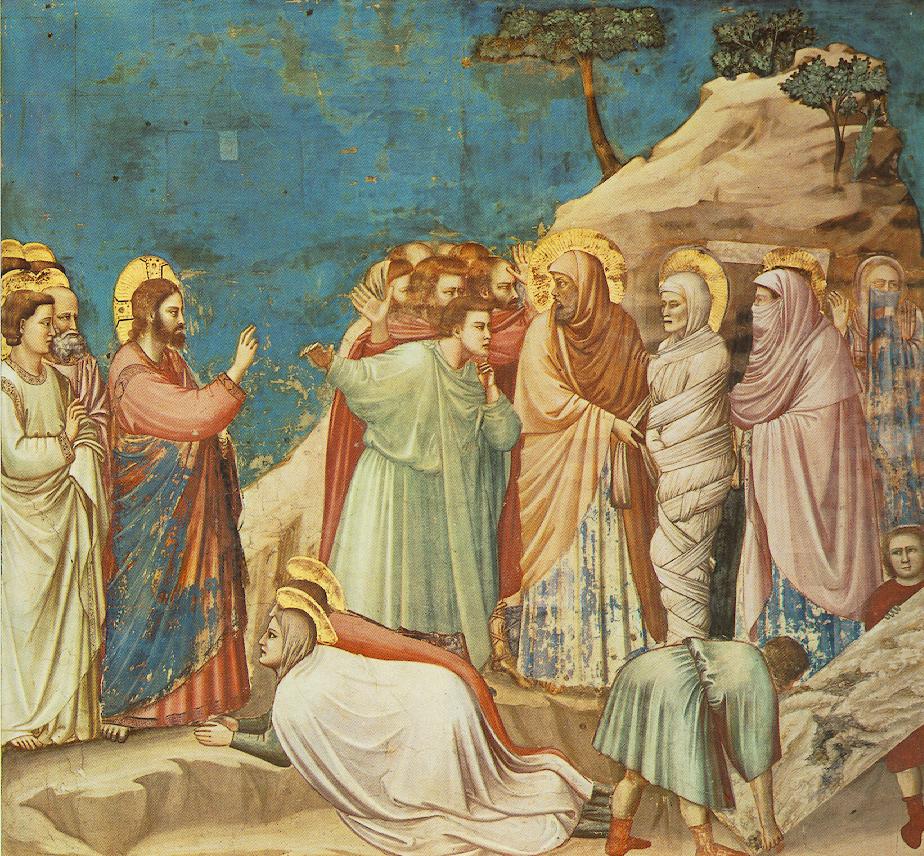
The story of the raising of Lazarus represents a key moment in the Gospel of John: it marks the transition from Jesus public ministry to his death and resurrection, and is a progressive journey from doubt to faith.
At the beginning, an apparent contradiction emerges: Jesus loves Lazarus but intentionally delays him, letting him die. This raises great human questions about pain and the apparent absence of God. The initial answer remains mysterious: illness will serve to manifest God’s glory.
In the dialogue with Martha, a wavering faith is evident: she believes in the future resurrection, but struggles in the face of actual death. Jesus reveals a decisive truth to her: “I am the resurrection and the life,” indicating that eternal life is already present for those who believe.
With Mary, the most human and profound side of Jesus emerges: he weeps and is indignant in the face of death. He does not accept evil, but fights it. God thus shows solidarity with human pain, sharing in their suffering.
In the final moment, Jesus brings Lazarus back to life. The miracle is not described in detail because the focus is elsewhere: Jesus has the power to give life. The answer to the problem of death is not a theoretical explanation, but the person of Christ himself.
The final message is that, while death continues to exist, it does not have the last word: for those who believe, every end already contains the seed of a new life. Blessed journey to you all!.